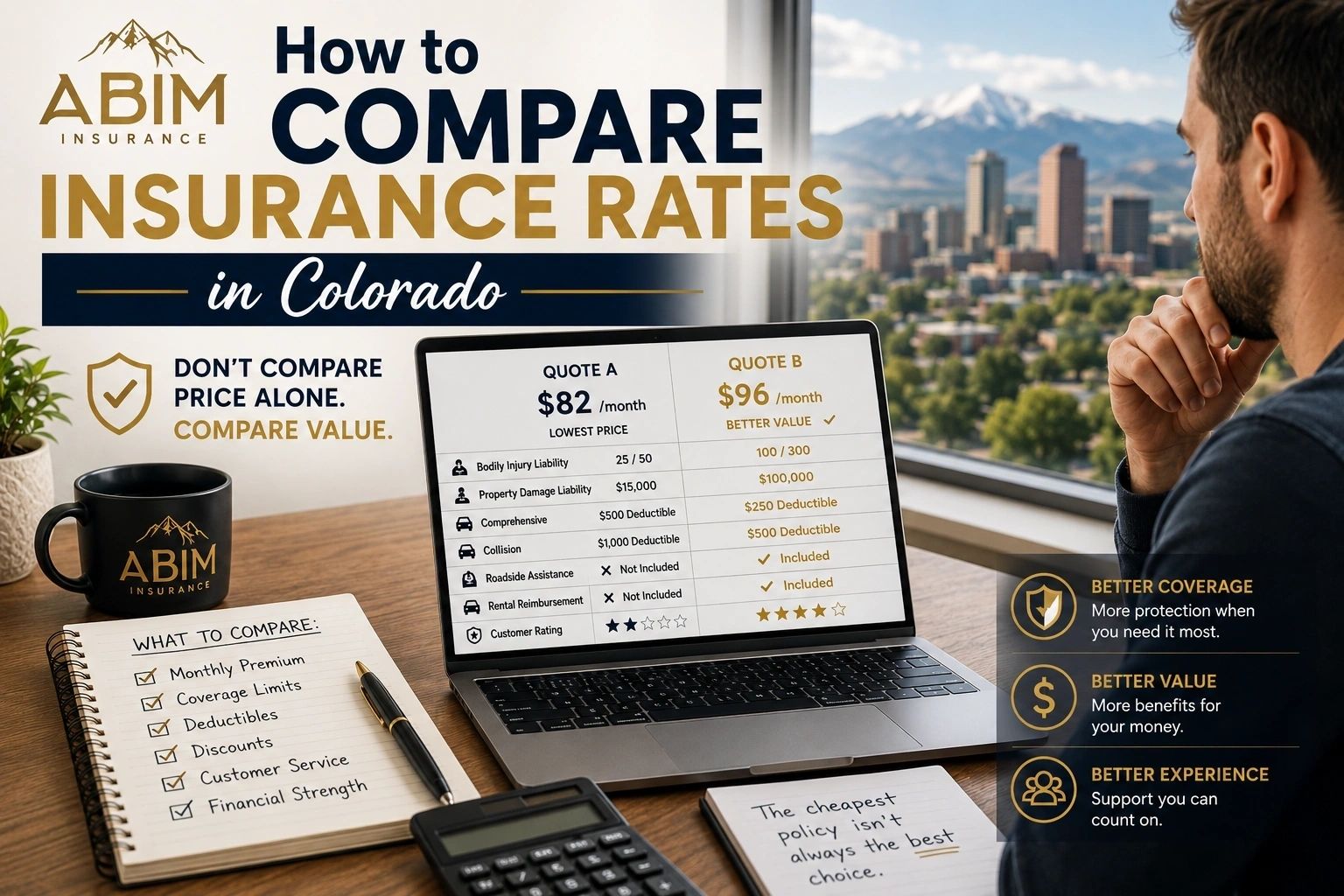
Why Comparing Insurance Rates in Colorado Could Save You Hundreds
Every year, Colorado residents spend millions more than necessary on insurance simply because they don't shop around. In a state with diverse coverage needs—from urban commuters in Denver to rural homeowners in the mountains—one-size-fits-all policies don't exist, and neither do fixed rates. The truth is, premiums for auto, home, and renters insurance can vary significantly between providers, even for the same driver or homeowner profile. That's why comparing insurance rates isn't just smart—it's essential financial protection.
By the end of this guide, you'll know how to accurately assess your coverage needs based on where you live, gather and compare multiple quotes efficiently, and spot hidden gaps in policies that could cost you later.
Start Your Colorado Insurance Provider Search the Right Way
Comparing insurance rates in Colorado begins with identifying reputable providers licensed to operate in the state. Follow these steps:
- Make a List of Licensed Providers — Start by verifying insurers authorized to sell policies in Colorado through the Division of Insurance.
- Narrow to Providers Offering Your Needed Coverage — Whether you need auto, home, or specialty policies like RV or renters insurance, confirm each provider offers the specific product you're shopping for.
- Check Local Reviews and Ratings — Search for Colorado-specific customer feedback on claims processing speed, agent responsiveness, and ease of service.
- Evaluate Digital Tools and Accessibility — Prioritize companies with user-friendly online quoting, mobile apps, and digital document management.
- Confirm Availability in Your County or City — Some insurers limit service to certain ZIP codes. Verify coverage is available in your exact location.
Know What to Look for in Your Colorado Insurance Policy
When comparing insurance rates, understanding key coverage factors ensures you're not just choosing the cheapest option—but the right protection for your needs. Start by evaluating liability limits, which determine how much your policy will pay if you're at fault in an accident. Next, consider your deductible—the amount you pay before insurance kicks in.
Don't overlook optional coverages like uninsured motorist protection, comprehensive and collision coverage, or personal injury protection (PIP), which are especially valuable in urban areas where weather events and traffic density can increase risk.
Master the Art of Side-by-Side Insurance Quotes
When comparing insurance rates in Colorado, consistency is key to ensuring accurate, apples-to-apples comparisons. Start by standardizing the coverage details across every quote—this means selecting identical liability limits, deductible amounts, and policy endorsements.
- Use the same vehicle and property details across providers, including VIN, year, make, model, and home square footage.
- Match coverage types exactly, whether it's full comprehensive, liability-only, or personal property protection.
- Disclose identical driving histories and credit profiles—inconsistencies here can skew rates.
- Compare the same add-ons, such as roadside assistance or rental reimbursement.
5 Key Discounts to Help Lower Your Insurance Rates
1. Multi-Policy (Bundle) Discount — Combining multiple policies—like auto and home or renters insurance—with a single provider often unlocks substantial savings.
2. Safe Driver Discount — Maintaining a clean driving record free of accidents and traffic violations can qualify you for a safe driver discount.
3. Pay-In-Full Discount — Paying your annual premium upfront instead of monthly may lead to a noticeable reduction in total cost.
4. Paperless & Auto-Pay Discount — Going digital by opting for paperless billing and enrolling in automatic payments can trigger small but meaningful savings.
5. Low Mileage Discount — If you drive less than the average Colorado driver, you may qualify for a low mileage discount.
Frequently Asked Questions
How often should I shop around for insurance rates in Colorado?
It's smart to compare insurance rates at least every 12 to 18 months, even if you're satisfied with your current provider. Rates, coverage options, and life circumstances change.
Does comparing insurance quotes hurt my credit score?
No. Insurance companies perform a "soft pull" when quoting—this is invisible to credit scoring models and won't affect your rating.
Can my location in Colorado affect my insurance rates?
Yes. Where you live can influence premiums due to local claim frequencies, weather risks, and auto theft rates. Urban centers often see higher rates than rural communities.
Should I switch insurers just for a lower rate?
Not necessarily. Always compare coverage levels, customer service reputation, and claims support before making a switch—cheapest isn't always best when you need to file a claim.
Take Control of Your Colorado Insurance Decisions
Comparing insurance rates in Colorado doesn't have to be overwhelming. Start by gathering accurate, up-to-date quotes from multiple providers across key coverage types like auto, home, and renters insurance. Be sure to compare not just premiums, but also deductible options, liability limits, and included benefits.
At ABIM Insurance, we help Colorado residents compare options from multiple carriers to find the right coverage at the right price. Contact us today for a personalized quote.